How the Nations Championship works, and why England finished above South Africa but missed the final
Twelve teams, six pool rounds, a points table for each hemisphere and a finals weekend at Twickenham. Here is how rugby's new north-v-south competition is decided.
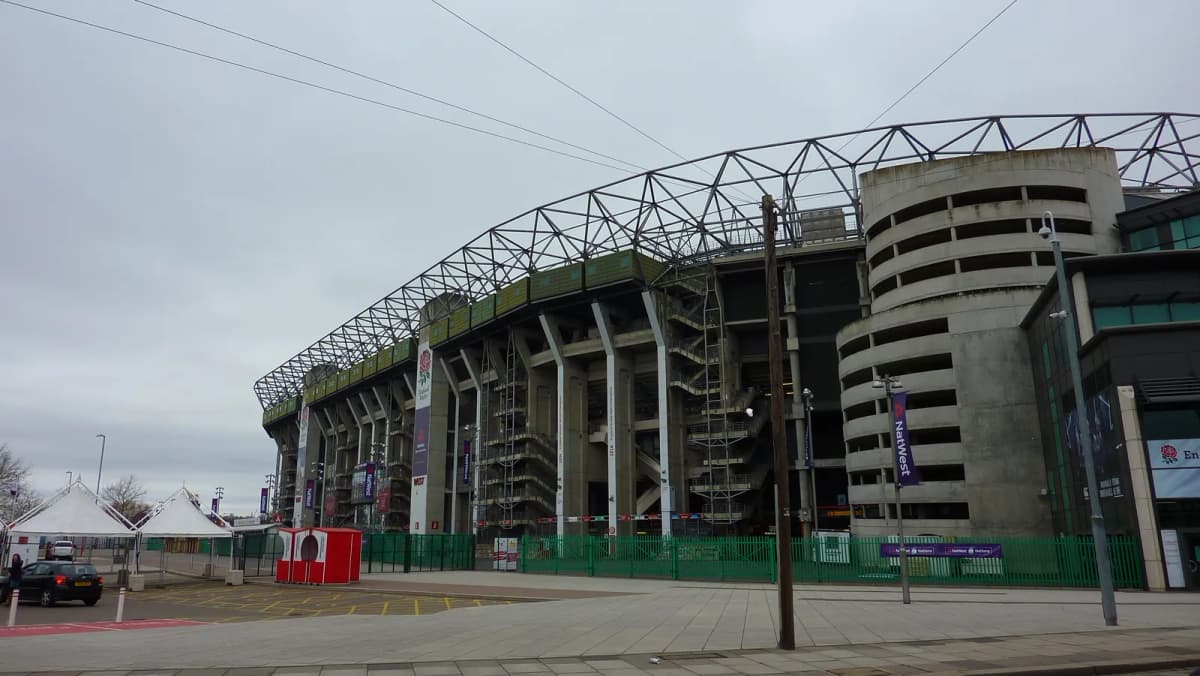
The Nations Championship is a 12-team international rugby competition that pits the six Six Nations sides against six teams from the south in a single round-robin, then pairs them off by rank for a finals weekend in London. Its first edition ends on Sunday, Nov. 29, when France, top of the northern table, meets South Africa, top of the southern one, in the Grand Final at Allianz Stadium, Twickenham.
That pairing also shows the format's most debated feature. England finished the pool stage with 25 points and Ireland with 24, both more than South Africa's 22, yet neither plays for the title, because only the two hemisphere winners do.
Who plays
The northern group is the Six Nations: England, France, Ireland, Italy, Scotland and Wales. The southern group is Argentina, Australia, New Zealand and South Africa, the four SANZAAR unions, plus two invited teams, Fiji and Japan, according to the official tournament site.
The competition was created by Six Nations Rugby and SANZAAR and is played every two years, skipping Rugby World Cup and British & Irish Lions tour years, Allianz Stadium's guide says. It replaces the existing July and November test windows rather than adding new ones, ESPN reported in November 2025. The Six Nations and the Rugby Championship carry on as before.
How the six pool rounds work
Every northern team plays every southern team once. Nobody plays a team from its own hemisphere at any stage, finals included.
- Rounds 1-3 (July 4, 11 and 18): the northern teams tour the south.
- Rounds 4-6 (Nov. 6-8, 13-15 and 21): the southern teams travel to Europe.
The results feed two separate tables, one per hemisphere, and each team is ranked from first to sixth within its own group.
The points system
Points in the pool stage follow a familiar rugby pattern, as set out by the organizers:
- 4 points for a win, 2 for a draw, none for a loss
- 1 bonus point for scoring four or more tries
- 1 bonus point for losing by seven points or fewer
A team can earn up to two bonus points in a match, so a side that scores four tries and loses narrowly takes two points from a defeat.
If two teams in the same hemisphere finish level on points, the tie is broken by most wins, then points difference, then tries difference, then most tries scored and, finally, a coin toss.
That ladder decided this year's southern title. South Africa and New Zealand both finished on 22 points with four wins each. South Africa went through to the Grand Final on points difference, plus-135 to New Zealand's plus-41, according to the official standings.
How the finals are paired
After Round 6, all 12 teams go to London. Finals weekend runs Friday to Sunday, with two matches a day, all at Allianz Stadium. The sixth-placed northern team plays the sixth-placed southern team, fifth plays fifth, and so on up to the Grand Final between the two first-placed sides.
Because every team has already met every opponent from the other hemisphere, each finals match is a rematch of a pool game. The 2026 pairings, with each team's pool-stage points:
- 1st v 1st, Grand Final: France (26) v South Africa (22), Sunday, Nov. 29, 4:40 p.m. GMT. France won the pool meeting 21-19 in Paris.
- 2nd v 2nd: England (25) v New Zealand (22), Saturday, Nov. 28, 4:40 p.m. GMT. England won 37-12 at Twickenham in November.
- 3rd v 3rd: Ireland (24) v Australia (14), Friday, Nov. 27. Ireland won Friday's match 38-14.
- 4th v 4th: Scotland (20) v Argentina (11), Sunday, Nov. 29, 1:10 p.m. GMT.
- 5th v 5th: Wales (17) v Japan (5), Saturday, Nov. 28. Wales won the November meeting 28-21 in Cardiff.
- 6th v 6th: Italy (2) v Fiji (4), Friday, Nov. 27. Italy won Friday's match 23-21, reversing a 21-16 home defeat to Fiji in Udine in November.
The second prize: north against south
Finals weekend also settles a hemisphere contest. Each of the five matches from sixth-v-sixth through second-v-second is worth one point to the winning side's hemisphere, and the Grand Final is worth two, so seven points are available. The first hemisphere to reach four points takes the hemisphere title, according to the finals weekend rules.
Friday's two results, Italy over Fiji and Ireland over Australia, put the north 2-0 up.
Ties work differently in the finals than in the pool stage. A level match goes to 10 minutes of golden-point extra time, in which the first score wins. If it is still level, the match is a draw and the hemisphere point is split. The Grand Final cannot end in a draw: it gets two 10-minute golden-point periods, and if the teams are still level, the title is decided by place kicks.
Why the format has critics
The conference structure rewards the winner of each hemisphere rather than the two best records overall. Before the November rounds, Jon Cardinelli of South Africa's Daily Maverick pointed out that South Africa and New Zealand were effectively competing with each other for one place in the final, while a northern leader could lose a second game and still get there. He warned that one of the world's best teams could miss the decider even after winning all six pool games with bonus points.
It did not come to that, but the final table made a version of his point. France reached the Grand Final with 26 points, South Africa with 22. England and Ireland, on 25 and 24, did not.
Teams outside the top 12 have a different complaint. Promotion and relegation do not begin until at least 2030, which has strengthened the argument from second-tier nations that the tournament is a closed shop, Sky Sports noted.
What changes by 2030
The next editions are due in 2028 and 2030, ESPN reported, and the 2030 tournament is the first that will decide promotion and relegation.
SANZAAR executive director Brendan Morris set out how that will work at a news conference in Tokyo in July, RugbyPass reported. During the 2030 finals weekend, the sixth-placed team in each hemisphere will play the winner of one of the two groups in the Nations Cup, the second-tier competition run by World Rugby. The winners of those two matches qualify for the 2032 Nations Championship. The report did not spell out how those play-offs fit alongside the usual sixth-v-sixth final.
The Nations Cup groups this year were Georgia, Spain, Romania, Portugal, Zimbabwe and Hong Kong in one, and Chile, Uruguay, the United States, Canada, Samoa and Tonga in the other. On the standings at the time Morris spoke, the play-offs would have been Italy against Georgia and Fiji against Chile.
For more, see our rugby calendar coverage, the latest from Sports and our other explainers.
The first champion is crowned on Nov. 29. The next edition is due in 2028.
Sources
- Nations Championship (official): The Championship
- Nations Championship (official): Finals Weekend format, hemisphere points and tiebreakers
- Nations Championship (official): Hemisphere tables and points system
- Nations Championship (official): Fixtures and results
- Allianz Stadium Twickenham: Nations Championship 2026 and Finals Weekend
- ESPN: Nations Championship, how rugby's new tournament works (Nov. 18, 2025)
- Daily Maverick: The odd maths of a Nations Championship final berth (Nov. 1, 2026)
- RugbyPass (French edition): Two Nations Cup teams will get a chance to qualify for 2032 (July 17, 2026)
- Sky Sports: Nations Championship fixtures, schedule and key info