How long are Thanksgiving leftovers good for? Turkey, gravy and pie, by the USDA's clock
Federal food-safety guidance gives cooked turkey, stuffing and gravy three to four days in the fridge. Here is what that means for food cooked on Nov. 26, plus freezing, reheating and pie.
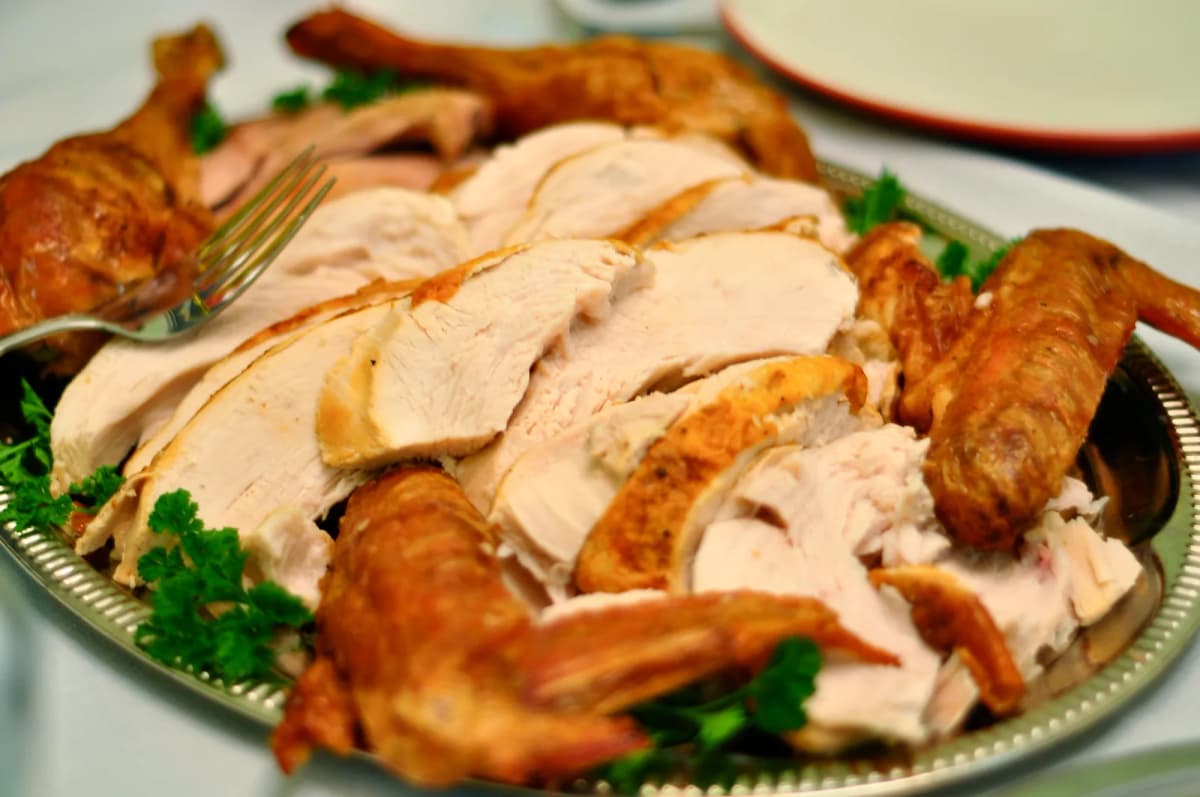
Thanksgiving leftovers are good for three to four days in the refrigerator, according to the U.S. Department of Agriculture's Food Safety and Inspection Service. That limit applies to the turkey, the stuffing and the gravy alike, and the Food and Drug Administration gives the same window for leftovers in general.
For a turkey roasted on Thanksgiving, Nov. 26, and put in the fridge that night, the window closes on Sunday or Monday. Anything you still want after that should already be in the freezer.
Can you eat turkey after 5 days?
Federal guidance does not stretch that far. Day 5 is past the three-to-four-day limit that USDA, the FDA and FoodSafety.gov all give for cooked poultry, and none of them makes an exception for turkey that still looks and smells fine.
The FoodSafety.gov storage chart explains why the fridge limits are short: they are meant to keep food from spoiling or becoming dangerous to eat. Cold slows bacteria down. It does not stop them.
The 2-hour rule comes first
The fridge clock only helps if the food got there in time. USDA says to throw out any turkey, stuffing or gravy left at room temperature for more than 2 hours, or more than 1 hour when the temperature is above 90 degrees Fahrenheit.
The reason is what the agency calls the danger zone, between 40 and 140 degrees, where bacteria grow most rapidly and can double in number in as little as 20 minutes. The FDA applies the same 2-hour limit to dessert. Its holiday food safety page says leftovers should be refrigerated within two hours, and adds, "That includes pumpkin pie!"
Holiday meals are a known risk. The Centers for Disease Control and Prevention estimates that *Clostridium perfringens*, a common cause of food poisoning, sickens nearly 900,000 people in the United States each year. The CDC says most outbreaks happen in November and December, and many have been linked to popular holiday foods such as turkey and roast beef.
How to store what is left
USDA's advice is to break big dishes down so they cool quickly:
- Cut the turkey into smaller pieces. Slice the breast meat; legs and wings can stay whole.
- Divide leftovers into small portions in covered, shallow containers, which cool faster than one big pot.
- Keep the fridge at 40 degrees or below and the freezer at 0 degrees. The FDA recommends an appliance thermometer, since few refrigerator controls show the actual temperature.
Hot food can go straight into the fridge. The FDA says that, despite what some people believe, doing so does not harm the appliance.
Freezing buys months, not forever
Freezing is the way to keep turkey past the weekend. Food kept frozen at 0 degrees stays safe indefinitely, according to USDA and FoodSafety.gov. The FDA explains that freezing does not kill most bacteria but does stop them from growing. The freezer time limits are about quality, not safety.
How long that quality lasts depends on the dish. USDA's turkey guidance says frozen leftovers are best used within 2 to 6 months, the same range FoodSafety.gov gives for cooked meat or poultry. The agency's general leftovers page puts it at 3 to 4 months, after which food can lose moisture and flavor.
When it is time to eat frozen leftovers, USDA says they can be thawed in the refrigerator, in cold water or in the microwave, or reheated straight from frozen. Food thawed in the fridge should be used within three to four days, and a portion can be taken out and the rest refrozen without reheating.
Reheat to 165 degrees
Cooked turkey can be eaten cold. If you warm it up, USDA says it should reach an internal temperature of 165 degrees, checked with a food thermometer.
- Oven: Set it no lower than 325 degrees. Add a little broth or water and cover the dish to keep the meat moist.
- Microwave: Cover and rotate the food, then let it stand before checking. Microwaves leave cold spots, so USDA advises taking the temperature in several places.
- Gravy, soups and sauces: Bring them to a rolling boil.
Stuffing, gravy and pie
Stuffing and gravy follow the same rules as the bird: 2 hours on the table at most, three to four days in the fridge. USDA says stuffing that was made ahead of time should be cooked right away and refrigerated in shallow containers.
Pie has its own lines on the FoodSafety.gov chart:
- Pumpkin or pecan pie: 3 to 4 days in the fridge after baking, or 1 to 2 months in the freezer.
- Custard and chiffon pies: 3 to 4 days in the fridge. Do not freeze.
Why the smell test fails
Sniffing the container is not a safety check. The FDA warns that food can make you very sick even when it does not look, smell or taste spoiled.
The bacteria that cause illness are different from the spoilage bacteria that make food go bad, the agency explains, so a turkey sandwich can seem perfectly fine and still carry germs. A bad smell still counts, though. The FDA says not to taste food that looks or smells questionable, and to follow a simple rule: "When in doubt, throw it out."
Quick reference
- Turkey, stuffing and gravy in the fridge: 3 to 4 days.
- Time out at room temperature: 2 hours at most, 1 hour above 90 degrees.
- Fridge and freezer settings: 40 degrees or below, and 0 degrees.
- Frozen cooked turkey, best quality: 2 to 6 months (USDA's general leftovers guidance says 3 to 4 months).
- Soups and stews: 3 to 4 days in the fridge, 2 to 3 months frozen.
- Pumpkin or pecan pie: 3 to 4 days in the fridge, 1 to 2 months frozen.
- Custard and chiffon pie: 3 to 4 days in the fridge; do not freeze.
- Reheating: 165 degrees inside; gravy to a rolling boil.
USDA's Meat and Poultry Hotline, 888-674-6854, takes food safety questions from 10 a.m. to 6 p.m. Eastern time, Monday through Friday.
A note on this guide: It summarizes general food safety guidance from federal agencies and is not medical advice. If you feel sick after eating, or have questions about your own health, contact a health care provider.
For more on the holiday weekend, see our Thanksgiving 2026 coverage. Find more from our Health desk and our other explainers.
For anything refrigerated on Thanksgiving night, the four-day mark falls on Monday, Nov. 30.
Sources
- USDA FSIS: Let's Talk Turkey, a consumer guide to safely roasting a turkey (storing and reheating leftovers)
- USDA FSIS: Leftovers and Food Safety
- USDA FSIS: "Danger Zone" (40 F - 140 F)
- USDA FSIS: Turkey Basics: Stuffing
- FoodSafety.gov: Cold Food Storage Chart
- FDA: Food Safety Tips for Healthy Holidays
- FDA: Are You Storing Food Safely?
- FDA: Refrigerator Thermometers, Cold Facts about Food Safety
- CDC: About C. perfringens food poisoning