Plug-in solar is legal in Britain. What you can buy, where it can go and what to check first
Balcony-style solar kits became legal in England, Scotland and Wales on Aug. 27. One kit per home, an 800-watt cap, compulsory registration and, in England, no panels on timber.
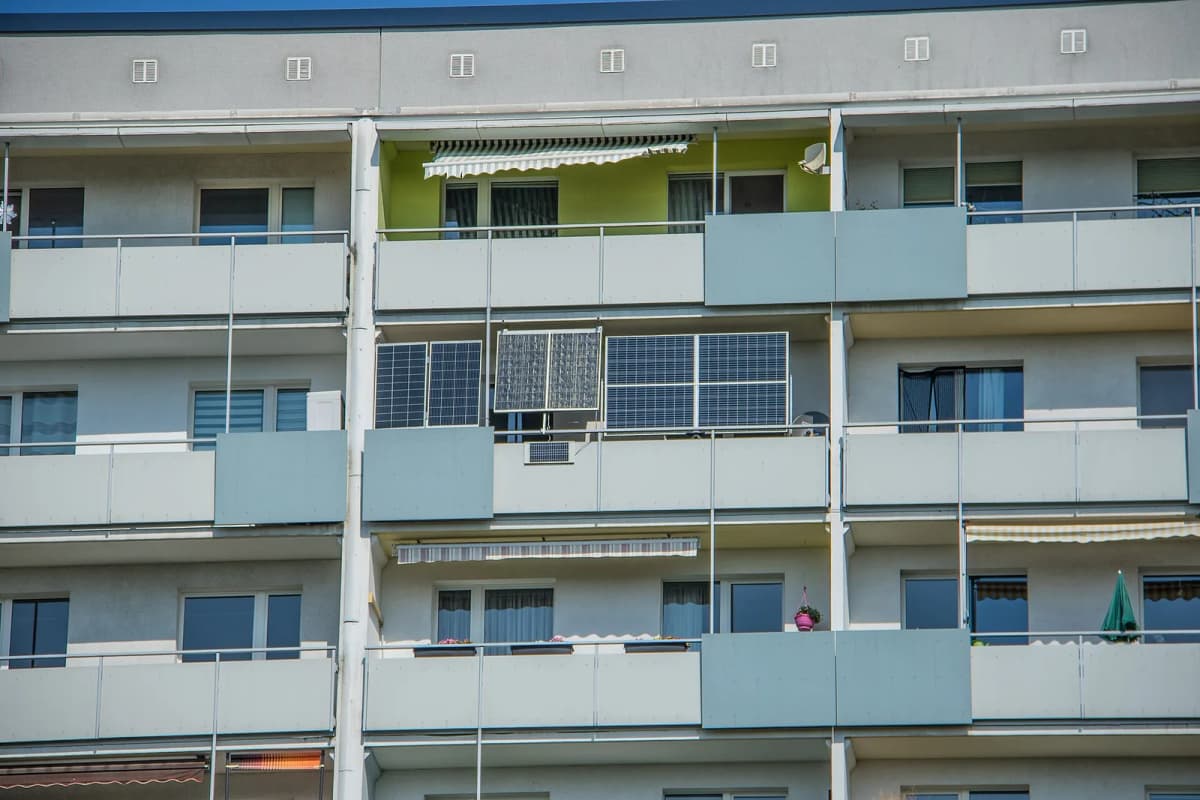
Yes. Since Aug. 27, 2026, it has been legal to buy and use plug-in solar panels in England, Scotland and Wales, as long as the kit meets the government's safety specification, it is the only one in the home and it is registered with the electricity network. Northern Ireland is not covered yet.
The change opened solar power to people who cannot fit rooftop panels, including some renters and people in flats. It also brought rules the shop shelf will not explain: where a kit may go, which socket it can use and whose permission you need first.
What changed in August
Until this year, the kits could not lawfully be sold or used in the UK because they did not comply with two sets of rules, the Plugs and Sockets etc. (Safety) Regulations 1994 and the Electricity Safety, Quality and Continuity Regulations 2002, according to the government's consultation response. The British plug standard, BS 1363, did not allow a plug to connect a generating device to a socket.
The government announced on March 24 that it would change that, consulted from June 16 to June 30 and received 466 responses, 85% of which backed the proposed product specification. The legal changes took effect on Aug. 27, when the Department for Energy Security and Net Zero said in a press release that the panels were "now legal to buy and use across the country."
In Northern Ireland, "plug-in solar panels aren't currently permitted for use," the Energy Saving Trust says. The technical specification itself says its application there "is subject to further consideration."
What a legal kit looks like
Under the interim product specification published in July, a kit has at least one solar panel, an inverter, a lead with a standard three-pin plug and a mounting system. The inverter can feed no more than 800 volt-amperes into the home, which the government describes as 800 watts.
The panels themselves can be rated higher. The Energy Saving Trust gives the example of two 450-watt panels, whose combined output the inverter caps at 800 watts, a practice some manufacturers call "clipping." Kits whose panels add up to more than 960 watts should get a professional check of the home's wiring first, the specification and the trust both say.
The rules cover panels only. The government's response says they do not extend to plug-in batteries.
To check that a model is compliant, the trust points buyers to the device register run by the Energy Networks Association on its Connect Direct site. The government said Currys, B&Q, Screwfix and Amazon worked with it on the rollout, and that Amazon, Argos, Currys and Wickes have committed to stock the kits. Consultation respondents raised concerns about non-compliant imports sold through online marketplaces, the government's response noted.
The rules once it is plugged in
One device per home. The specification would allow one kit per household circuit, but current network connection rules, known as Engineering Recommendation G98, limit it to one per household "unless and until that is amended." The trust says the government is looking at changing that. Linking several kits together is not allowed.
Straight into the wall. No extension leads, multi-way adaptors, RCD adaptors or travel adaptors. The trust adds that the socket should be on a circuit that does not also power lights or hardwired appliances such as a boiler or cooker.
Outdoor sockets need an electrician. They must be weatherproof and installed by a qualified electrician, the trust says. The specification sets a minimum protection rating of IP55 for outdoor plugs and sockets; the trust's guidance suggests at least IP65.
Check the fuse box. Look for switches marked RCD, RCBO or MCB. "If your consumer unit uses older style fuses, don't install plug-in solar panels," the trust advises.
Register it. The trust calls registration "a legal requirement" and directs owners to the UK Plug-In Solar Registration website. The specification requires every kit to state that notifying the local network operator of connection and disconnection is mandatory.
Where it can go: England's planning rules
A separate planning order for England, SI 2026/896, which also took effect on Aug. 27, folds plug-in solar into the existing rules that let homeowners install solar without a planning application. It also sets new limits:
- No part of a plug-in kit may sit on a wooden wall, balcony or enclosure, or on any part of a house or block of flats clad in timber.
- In a garden, no part may be fixed to a wooden fence, gate, wall or other enclosure.
- The permission does not cover listed buildings.
- On a house wall, panels may stick out no more than 0.2 meters where the wall borders a road and 0.4 meters elsewhere.
- In conservation areas and World Heritage Sites, panels may not go on a wall, balcony or roof enclosure that fronts a road.
Free-standing panels in a garden also face height limits, from 1 meter to 4 meters depending on how close they are to the boundary and the front of the house. The specification separately warns owners not to fix panels to walls that form the boundary between two homes.
The order covers England. For Scotland and Wales, the Energy Saving Trust tells people to check the requirements that apply in their area before installing.
Renters, leaseholders and flats
The government's advice is to check before buying whether you need permission from a landlord, building owner or freeholder, as well as planning permission or listed building consent. Those decisions belong to landlords, freeholders and councils, it said, though it encouraged them "to consider each case on its individual merits."
The Energy Saving Trust is blunter: do not buy before you have permission. Install a kit without it and you may have to remove it and pay for any damage, the same as with an unapproved satellite dish. Leaseholders should check their lease for rules on balconies, external walls and alterations. People in flats should speak to the building manager first, the trust says, especially where a building has combustible cladding or has had remediation work. It also advises calling your home insurer.
What it costs and what it saves
Here the sources do not agree, so it helps to see the range.
- The government says a kit can save "up to £110 a year" and supply up to 20% of an average home's electricity.
- The Energy Saving Trust estimates £100 a year for someone at home all day and £70 for someone out during the day, from about 700 kilowatt-hours of generation a year. It says compliant kits cost "from around £450."
- The Renewable Energy Association, a trade body, put the saving at "up to £100 a year" in the government's announcement.
On the trust's numbers, a £450 kit would take roughly four and a half to six and a half years to pay for itself. In April, before sales began, consultancy Ricardo wrote in pv magazine that UK prices were then around £400 and that payback could come in under four years.
Do not count on income from surplus power. Most energy suppliers require an MCS installation certificate before paying for exported electricity under the Smart Export Guarantee, so a plug-in kit normally does not qualify, the trust says. Some suppliers may offer their own tariff.
Quick answers
Do I need an electrician? Not for a standard kit plugged into a suitable indoor socket. The specification is written for installation "by ordinary persons." You do need one for a new outdoor socket, old fuse-box wiring, moving a socket or panels rated above 960 watts.
Is Ireland doing the same? Not yet. Buying plug-in panels is currently illegal there. A minister was due to tell the Cabinet on Nov. 24 that the devices could be on sale as early as the second quarter of 2027, RTÉ reported.
Our plug-in solar page tracks the rules as they change, alongside other explainers and the latest from our business desk.
What could change next
The government has said work will begin on permanent standards to replace the interim specification, and the one-kit limit stays until the G98 network rules are amended. In England, solar installations that were allowed before Aug. 27 but fall foul of the new planning limits can still go ahead until Aug. 26, 2027, under the order's transitional rules.
Sources
- GOV.UK, Households can save as plug-in solar panels come to market (27 August 2026)
- DESNZ, Plug-in solar: regulatory amendment and interim product specification, government response (July 2026)
- GOV.UK, Plug-in solar consultation page
- DESNZ, Plug-in Solar Device Interim Product Specification, Version 2.0 (July 2026)
- legislation.gov.uk, The Town and Country Planning (General Permitted Development) (England) (Amendment) Order 2026, SI 2
- Energy Saving Trust, Plug-in solar panels: checks to make before you buy
- Energy Saving Trust, Plug-in solar panels guide
- Energy Networks Association, Connect Direct device register
- pv magazine, column by Ricardo (9 April 2026)
- RTE News, plug-in solar in Ireland (24 November 2026)